
Read the subject of the report
Amazon’s Audio/Video Diagnostics examines the connected HDMI equipment’s capabilities. A reported 4K or HDR capability describes what that route can support. It does not measure the original programme, confirm a service entitlement or certify that the app is currently delivering that format.
Three observations can coexist: the TV supports 4K, the box outputs a 4K interface and a programme has a lower-resolution source. None of those statements contradicts the others. The error is turning one into evidence for all three.
Collect the next useful observation
Choose an item whose publisher identifies its available format. Inspect the app’s legitimate playback information and the television’s input information where provided. Record exactly which component reports each value. An app source report and a TV received-mode report are different evidence.
If an expected capability is absent from diagnostics, review the receiver or soundbar pass-through route. If the capability is present but one programme lacks the format, investigate that programme and app rather than assuming the same HDMI question remains unresolved.
Write a precise support report
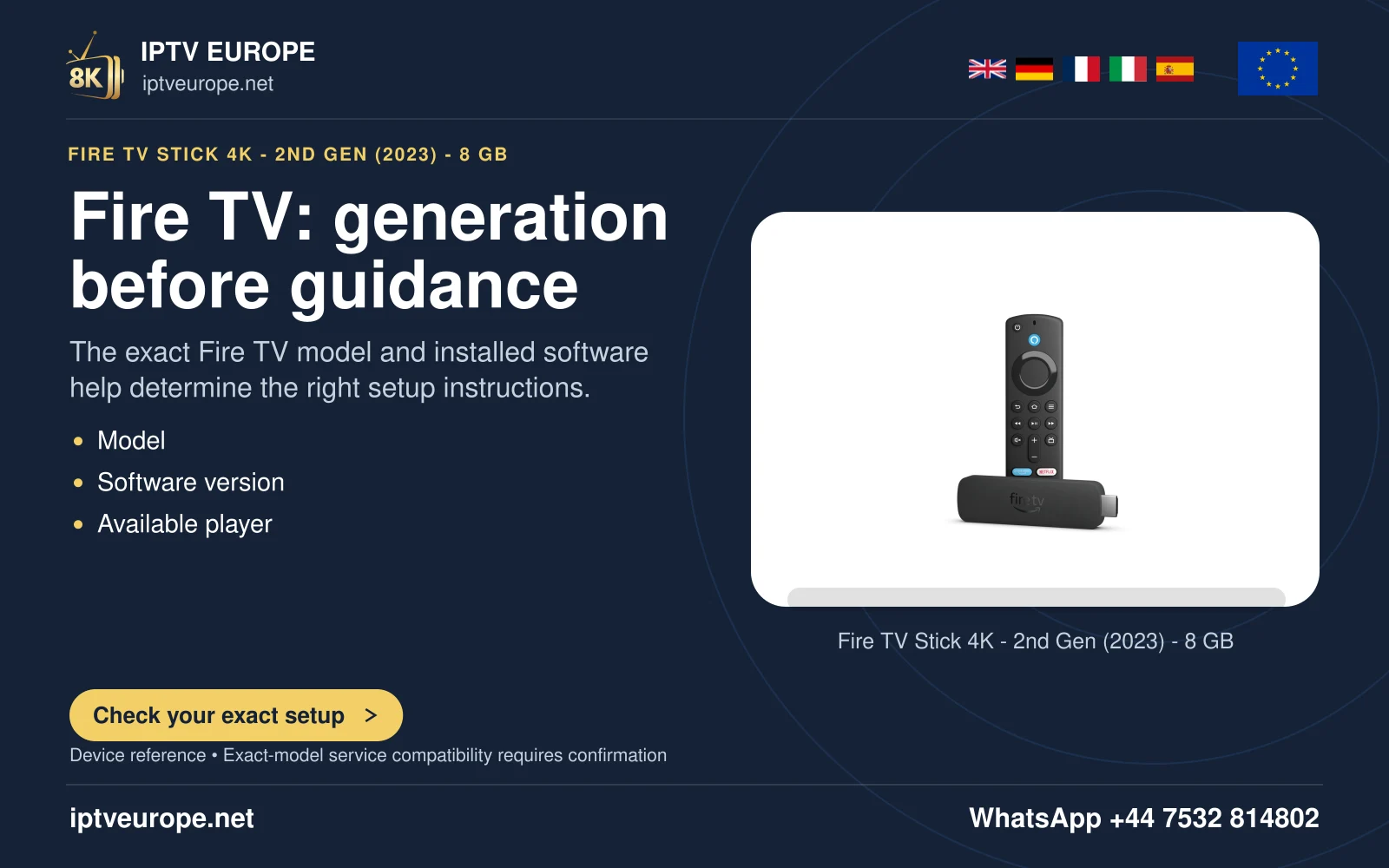
Provide the Fire TV model, diagnostic capability, current HDMI route and actual programme observation. Avoid a screenshot cropped so tightly that the reader cannot identify what the number describes.
This distinction is particularly useful for an “8K” marketing label: a logo or output setting cannot prove the encoded source. Only evidence about the actual media can answer that question.
Questions answered
Does a 4K-capable TV prove a native 4K stream?
No. Capability and source resolution are separate.
Does this diagnostic test broadband reliability?
Amazon describes HDMI capability checks, not an internet stream benchmark.
Sources & further reading
Official references for the subjects discussed. Service terms and device software can change.